Address: 19 Sycamore Road, Colchester, UK | Email: info@webjournal.co.uk


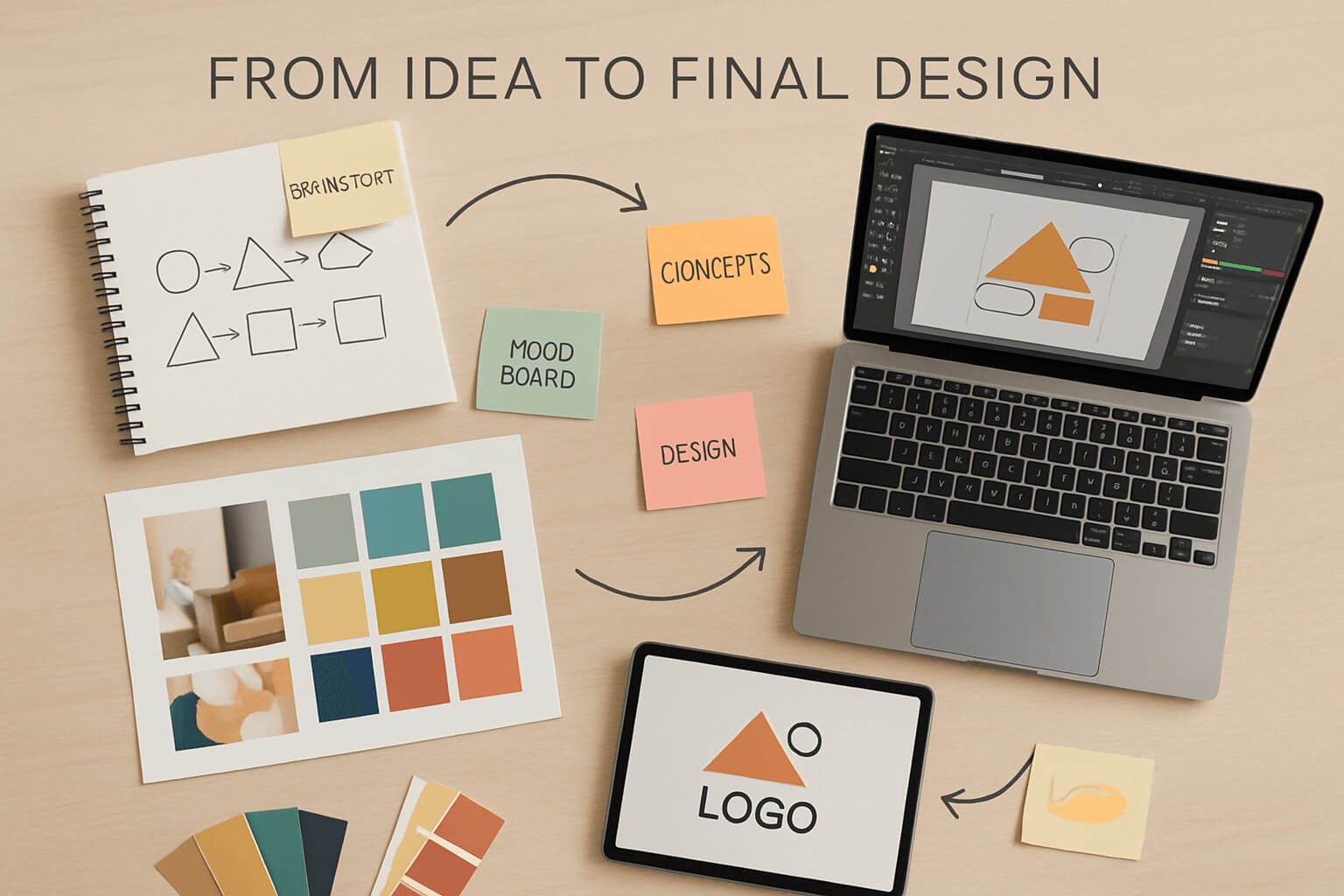
Every successful design begins with a clear vision and a structured approach. Whether it’s a website, logo, or social media graphic, understanding the creative process ensures the final product is not only visually appealing but also effective in achieving business goals. In this article, we’ll walk you through our complete creative process from idea to final design so you can see how thoughtful planning and execution lead to exceptional results.
1. Understanding the Client and Goals
The first step in our creative process is getting to know the client and understanding their goals. Without a clear understanding, even the most beautiful design can fail to serve its purpose.
Key Actions:
- Conduct meetings or interviews with stakeholders.
- Define project goals, target audience, and brand identity.
- Understand the desired message and tone.
- Research competitors and industry trends.
By aligning with the client’s vision from the beginning, we set the foundation for a successful design.
2. Research and Inspiration
Once the goals are clear, the next step is research and gathering inspiration. This ensures our designs are creative, relevant, and strategically positioned.
Steps in This Phase:
- Analyze competitor designs to identify strengths and gaps.
- Explore design trends that suit the brand’s style.
- Collect mood boards, color palettes, typography examples, and reference visuals.
This stage sparks creativity while ensuring the design aligns with both industry standards and the client’s expectations.
3. Ideation and Concept Development
After research, we move into ideation. This is where raw ideas start taking shape into concrete concepts.
How We Approach Ideation:
- Brainstorm multiple design directions and layouts.
- Sketch rough drafts or wireframes for visualization.
- Experiment with color schemes, typography, and imagery combinations.
- Evaluate ideas based on creativity, feasibility, and alignment with the project goals.
The goal is to generate several potential concepts before narrowing down to the most promising one.
4. Drafting and Design Execution
Once a concept is selected, it’s time for design execution. This is where ideas turn into tangible visuals.
Execution Process:
- Create high-fidelity mockups using tools like Adobe Illustrator, Photoshop, or Figma.
- Apply brand colors, typography, and visual elements consistently.
- Design layouts that are balanced, visually appealing, and user-friendly.
- Iterate internally to refine details and enhance overall aesthetics.
Attention to detail during this stage ensures that the design is not only attractive but also functional and aligned with the client’s goals.
5. Feedback and Revisions
No design is perfect on the first try. Feedback and revision are critical steps to refine the work and meet client expectations.
Our Revision Process:
- Present the design to the client for initial feedback.
- Discuss what works, what doesn’t, and potential improvements.
- Make necessary changes while maintaining creative integrity.
- Ensure all revisions stay within project timelines and goals.
This collaborative step ensures the client feels involved and satisfied with the final product.
6. Final Delivery and Implementation
After revisions, we prepare the final deliverables for client approval and implementation.
Final Steps Include:
- Exporting files in the required formats (JPEG, PNG, PDF, SVG).
- Providing design guidelines for consistent usage across platforms.
- Assisting with implementation, whether it’s uploading to a website, printing materials, or integrating into marketing campaigns.
- Ensuring the design is optimized for both performance and aesthetics.
Delivering a polished final product that meets all specifications ensures a smooth transition from design to real-world use.
7. Post-Project Evaluation
The creative process doesn’t end with delivery. Post-project evaluation helps improve future projects and maintain high-quality standards.
Evaluation Steps:
- Analyze user feedback or engagement metrics (for digital designs).
- Assess how well the design meets business objectives.
- Document lessons learned and best practices for future projects.
Continuous improvement is key to evolving as a design team and delivering even better results next time.
Why a Structured Creative Process Matters
A clear and structured creative process ensures:
- Consistency: Every design element aligns with the brand’s identity.
- Efficiency: Reduces wasted time and effort during revisions.
- Creativity: Encourages exploration of multiple ideas before finalization.
- Client Satisfaction: Keeps clients involved and ensures their goals are met.
- Better Results: Delivers designs that are visually appealing, functional, and effective.
Whether it’s a logo, website, or marketing material, following a structured creative process maximizes impact and ensures measurable success.
Conclusion
From understanding the client’s goals to delivering the final design, a well-defined creative process is the backbone of effective design work. By combining research, ideation, execution, and feedback, we create designs that are not only beautiful but also strategically aligned with business objectives.
Following this process helps businesses:
- Transform ideas into tangible visuals.
- Engage and delight their audience.
- Build a strong, recognizable brand.
- Achieve project goals efficiently and professionally.
A professional creative process guarantees that every design is purposeful, polished, and powerful, helping your brand stand out in a crowded market.